

Reduce Cognitive Load to maximize Mission Success
HFE at MTI
Learn how Monterey Technologies, Inc. applies human factors engineering to ensure that complex systems meet user needs to mission mission success.

Human factors is impactful
Good human factors design enhances the solution at every point of user engagement, resulting in:
Intuitive user interfaces, displays, and controls
Reduced operator workload and cognitive load
Improved situational awareness
Reduced likelihood and impact of “user error”
Increased trust and confidence
Reduced training burden
Increased comfort and reduced injury
Human factors unlocks system performance
Complex systems with advanced technologies often have more capability and functionality than users can extract. This leads to extremely capable systems that don’t live up to their potential in practice. Human factors is the key that unlocks this value, a force multiplier for system design and development.


Human factors enhances systems engineering
MTI’s expert human factors engineers support government agencies and prime contractors with applied research, interface design, and system evaluation. We engage early in the engineering effort to understand project needs, discover stakeholder objectives, and plan an effective human engineering approach. Through the design and development we support the creation of intuitive interfaces, reducing cognitive load and maximizing situational awareness. We enhance integration and test with comprehensive human factors verification and validation plans. Our work ensures the solution successfully meets mission needs in the operational context.
Human Performance modeling
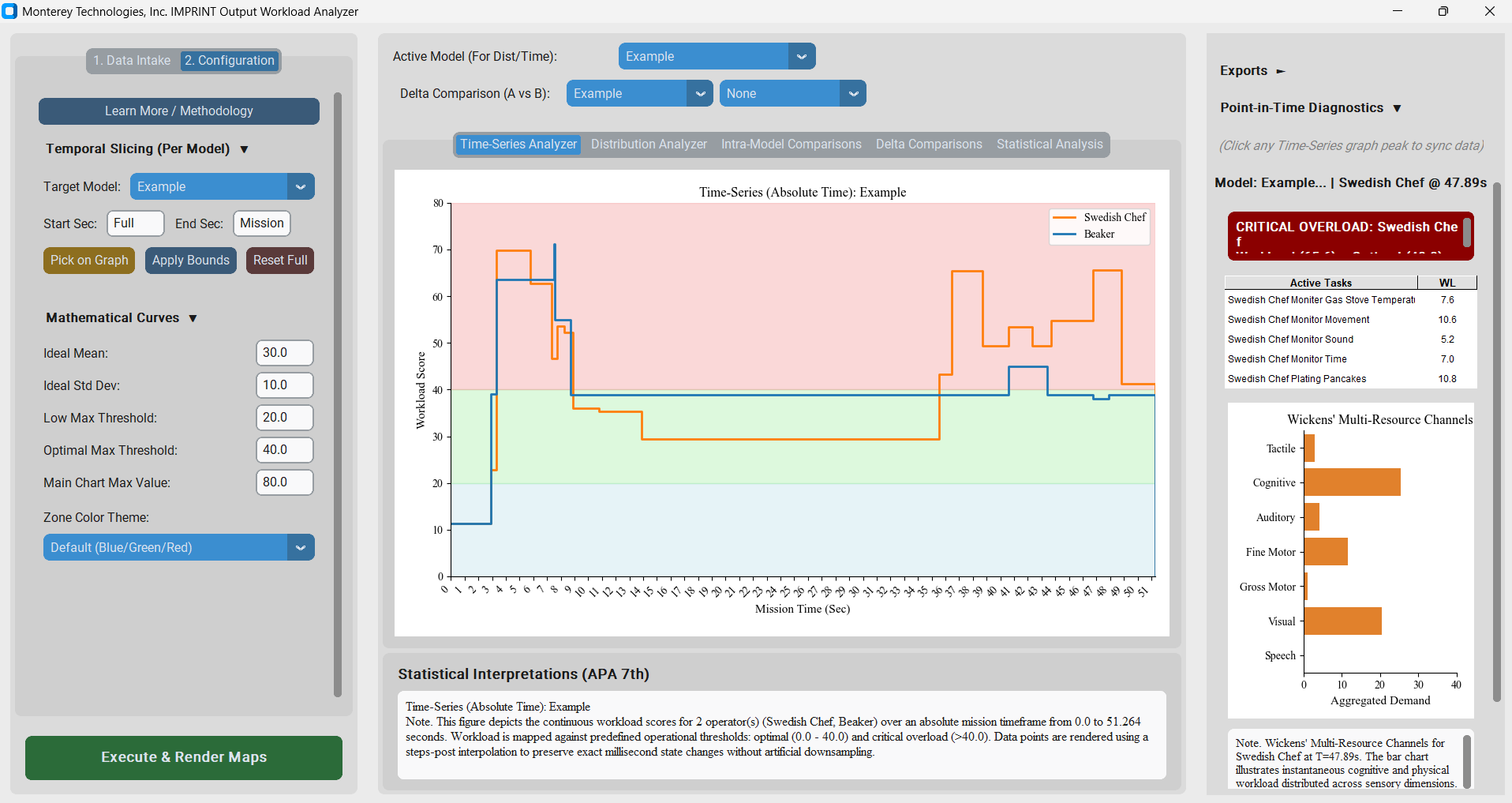
"HPM is a technique used by human factors and systems engineers for Human-Systems Integration (HSI) analysis. MTI’s experts use the Improved Performance and Research Integration Tool (IMPRINT), which is a discrete-event, stochastic network modeling tool used extensively by the U.S. military to identify potential human-driven constraints, define system requirements, and predict mental workload for operators interacting with complex equipment. MTI uses specialized task analysis methods to build IMPRINT models. These models enable efficient, evidence-based evaluation of design alternatives to improve mission performance and reduce operator workload.
MTI’s applied task-analysis methodology and subsequent IMPRINT models emphasize a rigorous front-end task analysis, decomposing complex behaviors and information exchange into discrete physical and cognitive steps. This breakdown allows for a high-fidelity representation of micro-tasks that are often overlooked in higher-level abstractions. MTI leverages these best practices and empowers human factors engineers to comprehensively test design alternatives and deliver actionable insights that enable stakeholders to make data-driven decisions with greater confidence."
Publications and Whitepapers

Designing for Humans in Complex Maritime Systems: Lessons for Advanced Technologies, Artificial Intelligence, and Autonomy
November 2023
International Maritime Conference

Analyzing Variability in Decision Making in Complex Systems: A Case Study
March 2024
National Defense Industry Association Human Systems Conference